Ask anyone who has visited Dubai what they remember most, and the answer is often the same: the desert. The city’s towers and malls are impressive, but it is the drive out to the red dunes, the light at sunset and the evening at a desert camp that people talk about for years afterwards. A Dubai desert safari is the single most booked experience in the UAE, and for good reason. It is easy to arrange, suits almost every age and budget, and shows you a side of the country that the city alone cannot.
This guide explains everything you need to know before you book. We cover the different types of safari, what happens on each one, how prices work, the best time of year and day to go, what to wear and bring, safety and health considerations, and how to choose between shared and private options. We also answer the questions our team in Al Satwa hears most often from guests. By the end, you will know exactly which safari fits your trip.
Tip: If you only have one evening free in Dubai, the Evening Desert Safari with BBQ Dinner gives you the most variety in a single trip: dune bashing, sunset, camel ride, sandboarding, dinner and live shows.
What is a Dubai desert safari?
A desert safari is a guided trip from your hotel into the sand dunes that surround Dubai. Most safaris head south-east of the city towards the red dunes near Lahbab and the Al Awir area, or into the Dubai Desert Conservation Reserve, about 45 minutes to an hour from Downtown. You travel in a 4×4 vehicle driven by an experienced desert driver, and depending on the package you choose, the trip can include dune driving, a stop for photos, time at a Bedouin-style camp, food, entertainment and extra activities such as quad biking.
The word “safari” can be confusing for first-time visitors who expect wildlife. You may see camels, desert birds and, in the conservation areas, Arabian oryx or gazelles, but the main attraction is the landscape itself and the experience of the dunes. Think of it as an adventure drive followed by a cultural evening rather than an animal-spotting trip.
There is no single “standard” safari. Operators combine the same building blocks in different ways, which is why prices range so widely. Understanding those building blocks is the key to choosing well.
The building blocks of a safari
- Hotel pickup and drop-off. Almost every safari includes collection from your hotel or residence in Dubai. Pickup from Sharjah, Ajman or further away is usually possible for an extra charge.
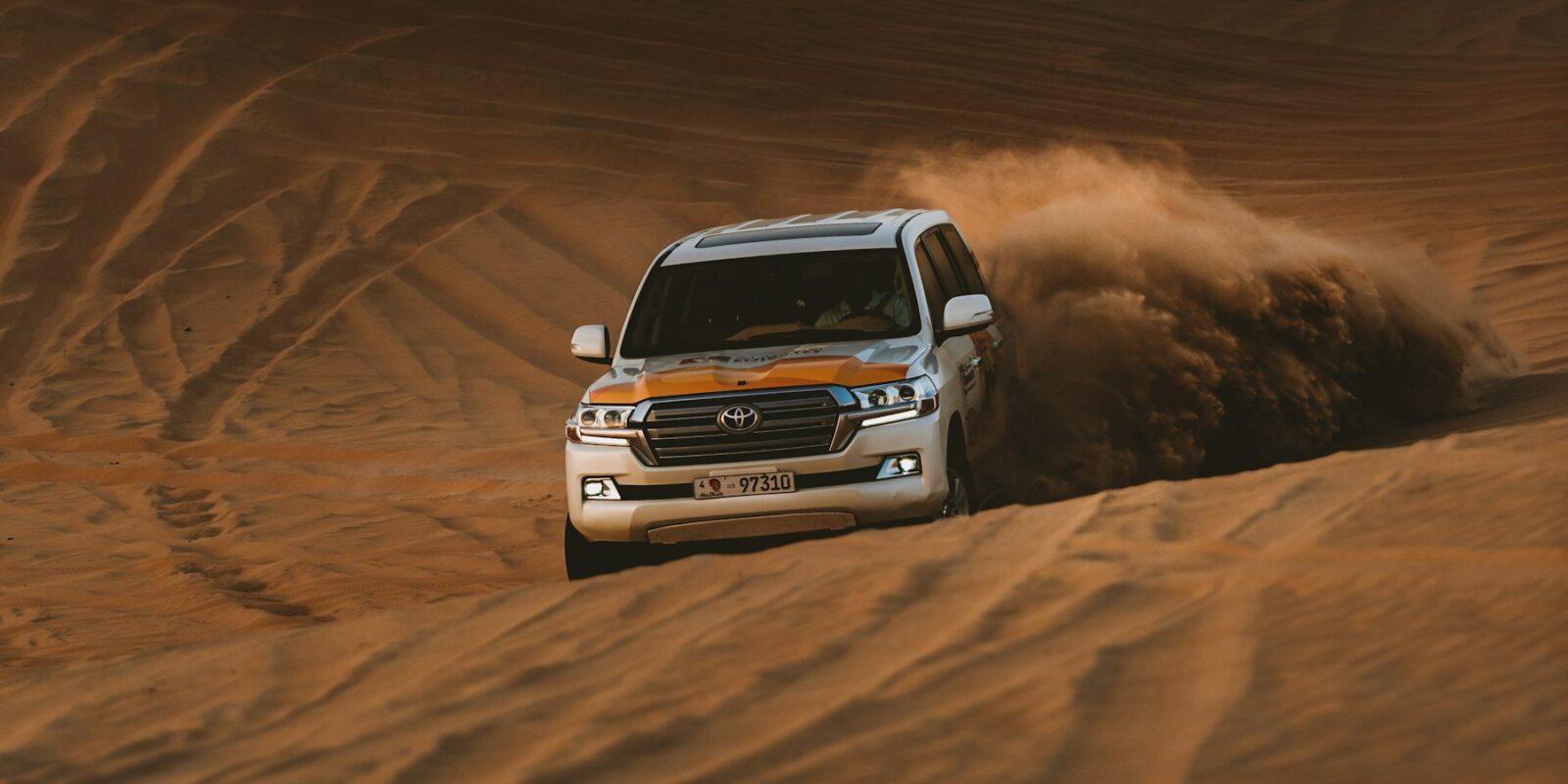
- Dune bashing. The driver takes the 4×4 up, along and down the dunes at speed. It feels like a roller coaster on sand and typically lasts 20 to 40 minutes.
- Sunset stop. On evening trips, the convoy stops on a high dune so you can take photos as the sun goes down.
- Camp activities. Camel rides, sandboarding, henna painting, traditional dress photos and shisha are common.
- Dinner. Usually a barbecue buffet with grilled meats, rice, salads, Arabic mezze and desserts, with vegetarian dishes available.
- Live shows. Tanoura (a spinning dance in colourful skirts), fire shows and belly dancing are the classic evening entertainment.
- Add-ons. Quad bikes, dune buggies, VIP seating, private vehicles and overnight stays can be added to most packages.
Types of desert safari in Dubai
Here are the main safari formats you will find, with what each one involves and who it suits best.
Evening desert safari
The evening safari is by far the most popular choice. Pickup is usually between 3:00 and 3:30 PM, and you are back at your hotel around 9:00 to 9:30 PM. The trip combines dune bashing in the late afternoon, a sunset photo stop, camp activities as the light fades, and a dinner with live shows once it is dark.
It suits first-time visitors, families, couples and groups of friends. Because it packs so much into one trip, it is also the best value for most people. Our Evening Desert Safari with BBQ Dinner follows this classic format and is our best-selling tour.
A typical evening safari timeline looks like this:
| Time | What happens |
|---|---|
| 3:00 – 3:30 PM | Pickup from your hotel in a 4×4 |
| 4:30 PM | Arrive at the dunes, tyres deflated, dune bashing begins |
| 5:45 PM | Sunset photo stop on a high dune |
| 6:30 PM | Arrive at camp: camel ride, henna, sandboarding |
| 7:30 PM | BBQ dinner and live shows |
| 9:00 PM | Drive back to Dubai |
Morning desert safari
A morning safari is shorter and focuses on the adventure. You are collected around 8:00 AM, spend time dune bashing and sandboarding, often visit a camel farm, and are back in the city by lunchtime. There is usually no meal or show.
Mornings are cooler and the light is soft and golden, which photographers love. It is a good option if your evenings are already booked, if you are visiting in the hotter months, or if you want the dune experience without a long evening out. See our Morning Desert Safari with Sandboarding.
Overnight desert safari
An overnight safari starts like the evening version, but instead of driving back after dinner, you sleep at the camp. Expect a tent with bedding, time to look at the stars away from city lights, and a sunrise breakfast before you return. It is ideal for couples and anyone who wants a slower, more memorable experience. Our Overnight Desert Safari Camp includes dinner, shows, a tent and breakfast.
Premium and private-camp safaris
Standard camps can host many guests at once, especially in the busy winter season. Premium safaris use smaller camps, fewer people per vehicle, served dinners instead of buffet queues, and better seating for the shows. They cost more but feel calmer and more personal. Our Premium Desert Safari at a Private Camp uses Land Cruisers with fewer guests per car and a served dinner.
Adventure safaris: quad bikes and buggies
If you want to drive yourself, you can add a quad bike session to an evening safari or book a dedicated buggy experience. Quad bikes are single-rider machines you steer through a marked area of dunes. Dune buggies (also called UTVs) are more powerful, side-by-side vehicles that you drive behind a guide across open sand.
- Desert Safari with Quad Biking adds 30 minutes on your own quad to the evening safari.
- Dune Buggy Desert Adventure is a self-drive session of one or two hours in a 2-seater or family buggy.
Hot air balloon safari
For a once-in-a-lifetime experience, a hot air balloon flight takes you over the dunes at sunrise. Pickup is very early, around 4:30 AM, and after about an hour in the air you land for breakfast and often a falcon show. It is the most expensive desert experience but one many guests call the highlight of their trip. Read our hot air balloon guide or see the Hot Air Balloon Ride over the Desert.
Safaris from Abu Dhabi and Ras Al Khaimah
If you are staying outside Dubai, you do not need to travel back to the city. We run safaris with pickup from Abu Dhabi and Ras Al Khaimah too: Abu Dhabi Desert Safari with Dinner and Ras Al Khaimah Desert Safari with Dinner.
Compare all desert safaris side by side
How much does a desert safari cost?
Prices depend on what is included, the vehicle, the size of the camp and whether you share or book privately. The table below gives starting prices for our main safari types so you can compare. Prices are per adult in AED unless noted.
| Safari type | Duration | Starting price |
|---|---|---|
| Morning safari with sandboarding | 4 hours | AED 95 |
| Evening safari with BBQ dinner | 6 hours | AED 120 |
| Camel farm visit and camel ride | 3 hours | AED 150 |
| Evening safari with quad biking | 6.5 hours | AED 220 |
| Premium safari at a private camp | 6 hours | AED 249 |
| Overnight desert camp | 18 hours | AED 350 |
| Dune buggy (per buggy) | 1 hour driving | AED 450 |
| Hot air balloon at sunrise | 4 hours | AED 1,099 |
Children aged 3 to 11 pay a lower price on most safaris, and children under 3 usually join free. A private 4×4 for your own group adds a fixed group charge rather than a per-person fee, which often makes it good value for families of four to six.
Why are some safaris much cheaper?
You will find safaris advertised online for very low prices. The difference usually comes down to a few things: very large shared camps, crowded vehicles, shorter dune bashing, basic food, or extra fees added at the camp for activities you assumed were included. Before you book any safari, check exactly what the price covers: dune bashing time, camel ride, sandboarding, dinner, soft drinks and shows. Our tour pages list what is included and what is not, so there are no surprises.
Good to know: Our safari prices include VAT and there is no booking fee. You can pay cash or card on the day, or ask us for a secure payment link.
When is the best time to do a desert safari?
The desert is open all year, but the experience changes a lot with the season and time of day. We have a full article on the best time to do a desert safari in Dubai, but here is the short version.
Best season
October to April is the most comfortable period. Days are warm, evenings at the camp are pleasant, and in December and January you may even want a light jacket after sunset. This is also peak season, so book a few days ahead, especially around weekends, Christmas, New Year and UAE public holidays.
From May to September, afternoon temperatures in the desert are very high. Evening safaris still run because pickup is timed so you reach the dunes as the heat eases, but morning safaris and sunset-focused trips are more comfortable. Summer is quieter and you will often find camps less busy.
Best time of day
- Evening gives you the full package and the sunset, and is the best all-round choice.
- Morning is cooler, quieter and better for photography.
- Overnight lets you see both sunset and sunrise and a sky full of stars.
- Sunrise balloon is unforgettable but requires a very early start.
What to wear and bring
Desert clothing is about comfort and modesty. You do not need special gear.
- Clothes: Light, loose cotton or linen. Shoulders and knees covered is respectful at camps and comfortable in the sun. In winter, bring a light jacket or sweater for the evening.
- Shoes: Closed shoes or sandals you do not mind filling with sand. Many guests go barefoot on the dunes.
- Sun protection: Sunglasses, sunscreen and a cap or scarf.
- Phone and camera: A zip bag or case protects your phone from fine sand.
- Cash: Useful for optional extras such as photos, souvenirs or drinks not included in the package.
- Medication: If you get motion sickness, take something before the dune drive.
Is dune bashing safe?
Dune bashing is driven by trained, licensed drivers in vehicles fitted with roll cages, and it is a well-established activity. Every passenger wears a seatbelt. That said, it is a physical, bumpy ride, and it is not recommended for pregnant guests, babies, people with back or neck problems, heart conditions or recent surgery.
Important: If anyone in your group should avoid dune bashing, tell us when you book. We can arrange a smoother route or a direct transfer to the camp so they still enjoy the sunset, dinner and shows.
If you feel uncomfortable during the drive, ask the driver to slow down. They will always do so. Sitting in the front seat helps with motion sickness.
Shared or private safari?
On a shared safari you travel in a 4×4 with other guests, usually up to six people per vehicle, and join a shared camp. It is sociable and the most affordable option.
A private safari gives your group its own vehicle and driver. You can set the pace, ask for gentler or more thrilling dune driving, and stop for photos when you like. For families or groups of four to six, the private vehicle supplement is often only slightly more per person than the shared price. It is also the better choice if you have young children, elderly relatives or anyone who may want a calmer drive.
What the food is like at a desert camp
Dinner is a big part of the evening, so it helps to know what to expect. Most camps serve a buffet that mixes Arabic and international dishes. Grilled chicken, lamb or beef skewers and kofta come straight off the barbecue, alongside rice, bread, hummus, moutabal, tabbouleh, fattoush and fresh salads. There is usually a vegetarian main such as vegetable curry or grilled halloumi, plus fruit and Arabic sweets like luqaimat (small fried dumplings with date syrup) for dessert.
Water, soft drinks, tea and Arabic coffee are included on our evening safari. Arabic coffee, known as gahwa, is lightly spiced with cardamom and served in small cups with dates; it is a traditional welcome, and it is polite to accept a cup. If you have allergies or dietary needs such as vegan, gluten-free or no spicy food, tell us when you book so we can let the camp know.
On premium safaris the food is usually served to your table, the choice is wider, and the quality is a step up. If dinner matters a lot to your group, it is worth the upgrade.
Desert culture and camp etiquette
The camps are designed to give you a taste of Bedouin hospitality, the traditional way of life of the desert tribes of Arabia. A few simple points help you enjoy it and show respect:
- Dress modestly around the camp. Light, covering clothing is both respectful and practical.
- Ask before photographing people, especially local staff and performers off stage.
- Use your right hand when accepting food or coffee, a small gesture that is appreciated.
- Shake the cup gently from side to side when you have had enough Arabic coffee; otherwise your host will keep refilling it.
- Leave no trace. The desert is a fragile environment. Take any rubbish back to the camp bins.
During Ramadan, safaris still run, but some camps change their shows and the timing of dinner to fit around the evening Iftar meal. Belly dancing is usually not performed during Ramadan. Ask us for the latest details if you are travelling during the holy month.
Tips from our team
After arranging thousands of safaris, these are the tips we give every guest:
- Eat a light lunch. Dune bashing on a full stomach is not fun.
- Charge your phone. You will take more photos than you expect, especially at sunset.
- Be ready at pickup time. Drivers collect several guests, so a few minutes’ delay affects the whole group.
- Try sandboarding early, before dinner, while there is still light.
- Ask for the vegetarian menu in advance if you need it. Most camps have good options.
- Combine with the city. A Dubai City Tour in the morning and a safari in the afternoon makes a full, easy day.
- Book a few days ahead in winter. Last-minute bookings are often possible, but popular camps fill up.
Planning your safari as part of a longer trip
A desert safari fits neatly into almost any Dubai itinerary. Many guests book it as part of a Dubai 4 Nights Holiday Package, which also includes a city tour, a Dubai Marina dhow cruise and the Burj Khalifa. If you need a visa to visit the UAE, we can arrange that too: see our UAE 30-Day Tourist Visa.
Arriving at the airport? Book a Dubai Airport Pickup so your driver is waiting when you land, then plan the safari for your second or third day once you have settled in.
For more ideas, see our guide to the best things to do in Dubai with family and our Dubai itinerary for first-time visitors.
How to book with Horizon Heights Travel
Booking takes a few minutes:
- Choose your safari on our desert safari page.
- Pick your date, shared or private option, number of adults and children, and any add-ons. The price updates as you go.
- Enter your name, WhatsApp number and hotel. You get a booking reference straight away.
- Our team confirms your pickup time on WhatsApp, usually within 30 minutes during office hours.
You can also visit our office at Satwa Roundabout or message us on WhatsApp at +971 56 291 2168. If you have questions, our help page covers changes, cancellations and what happens on the day.
Frequently asked questions
How long is a Dubai desert safari?
An evening safari lasts about six hours including hotel pickup and drop-off. A morning safari takes around four hours, and an overnight safari about 18 hours.
Is a desert safari suitable for children?
Yes. Children enjoy the camel rides, sandboarding and shows, and those under 3 usually join free. Dune bashing is not recommended for babies, so ask us for a gentler route or a direct camp transfer if you are travelling with an infant.
What is included in the evening safari?
Our evening safari includes hotel pickup and drop-off in a shared 4×4, dune bashing, a sunset stop, a camel ride, sandboarding, henna, a BBQ buffet with vegetarian options, soft drinks and water, and live tanoura, fire and belly dance shows.
Can I do a desert safari in summer?
Yes. Evening safaris run all year and are timed to reach the dunes as the heat eases. Morning safaris are also a comfortable choice in summer.
Do I need to bring my passport?
Carry a copy of your ID or passport. It is not usually checked, but it is good practice when travelling outside the city.
What if the weather is bad?
Sandstorms and rain are rare, but if a safari is cancelled for safety reasons, you can choose a new date or a full refund.
Can pregnant women go on a desert safari?
Dune bashing is not recommended during pregnancy. We can arrange a direct transfer to the camp so you can still enjoy the sunset, dinner and shows without the bumpy drive.